Play details
| Playwright | Susan Glaspell |
| First published | 1917 |
| Period | Early 20th century |
| Location | USA |
| Format | One-act play |
| Cast size | 5 (3 M / 2 F) |
| Genre(s) | Modernist Drama, Feminist Drama, Psychological Drama |
Introduction to The Outside
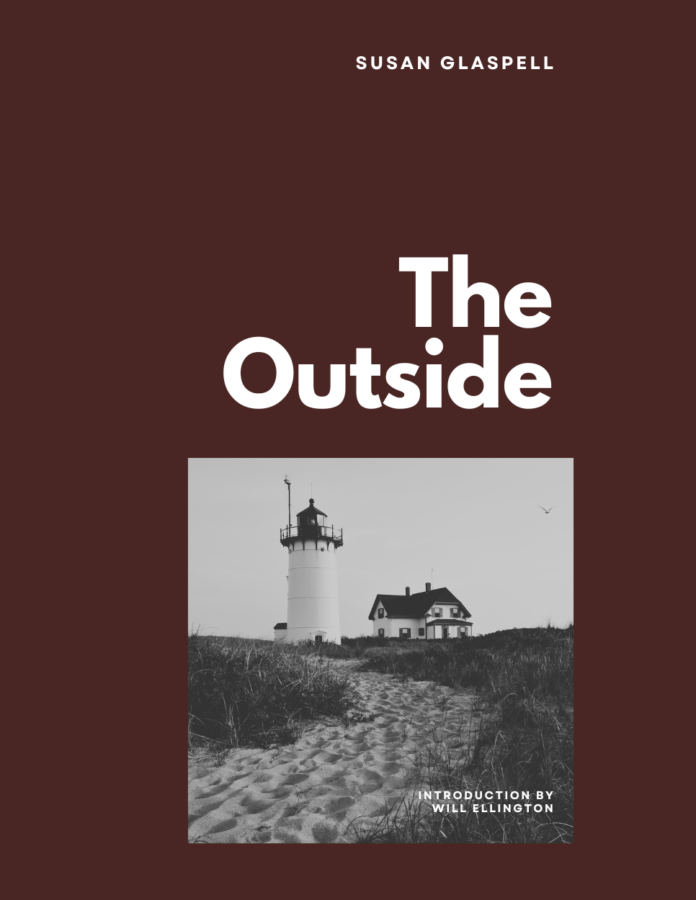
Susan Glaspell’s one-act play The Outside (1917) is a haunting and symbolic exploration of grief, isolation, and emotional survival. Set on the bleak, rocky coast of Cape Cod, the play centers on two women—Mrs. Patrick, who lives alone in a life-saving station, and Allie Mayo, a woman who has retreated from society after suffering personal tragedy. When a drowned man is brought ashore, the women’s detached responses reveal how deeply they have been numbed by their own losses. Unlike more conventional dramas of its time, The Outside does not focus on action or plot, but on atmosphere and inner emotional states, making it one of Glaspell’s most experimental works.
The historical context of The Outside is essential to understanding its themes. The play was written and first produced in 1917, at a time when American theatre was undergoing major changes. Glaspell was a founding member of the Provincetown Players, a group dedicated to creating serious, artistic drama in contrast to the commercial Broadway theater. This group, which also included playwright Eugene O’Neill, helped bring modernist ideas into American drama, emphasizing psychological depth, symbolism, and social realism. The Outside reflects this movement by using setting, silence, and mood rather than dramatic action to convey meaning.
The play also reflects the emotional climate of the period in which it was written. The United States entered World War I in 1917, and the sense of widespread loss and uncertainty shaped much of the literature and art of the time. Although The Outside does not directly reference the war, its focus on death, mourning, and emotional withdrawal mirrors a society grappling with large-scale tragedy. The drowned man in the play becomes a symbol of all the lives lost and the quiet, private suffering that followed.
Women’s roles in society were also changing during this period. Like Glaspell’s most well-known play Trifles, The Outside presents female characters whose inner lives are shaped by experiences that are often ignored or misunderstood. Women were expected to be emotionally strong caretakers, yet Glaspell shows how grief can isolate and paralyze them. Mrs. Patrick and Allie Mayo have lost children, and their refusal to engage emotionally with the world reflects both their trauma and their resistance to a society that demands constant emotional labor from women.
Through its stark setting and symbolic language, The Outside explores what it means to survive after loss. Glaspell suggests that grief can push people to withdraw from human connection, leaving them on the “outside” of life itself.